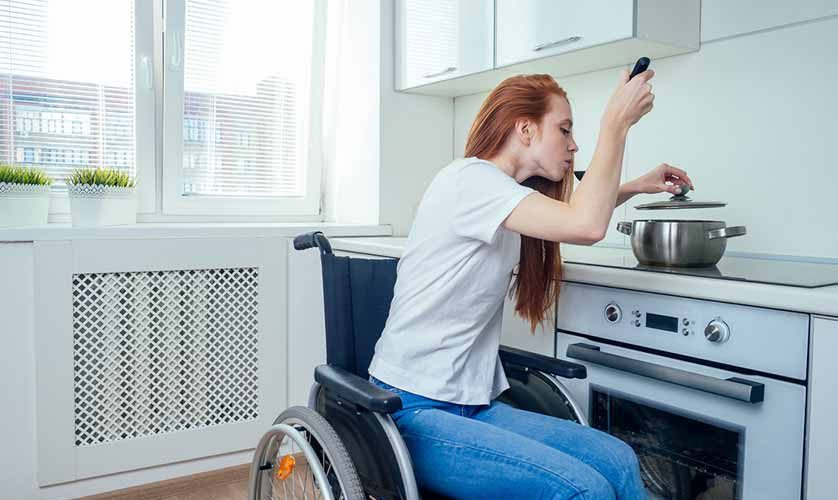
Preparing meals and cooking can be a struggle for wheelchair users and people with limited mobility. Fortunately, the Americans With Disabilities Act (ADA) has guidelines to allow these individuals to navigate kitchens safely. If you have a physically challenged family member, accessible remodeling is something you should consider.
Here are the common characteristics of an ADA-compliant kitchen.
Key Features of ADA-Compliant Kitchens
Countertops and Work Surfaces
The height of accessible kitchen work surfaces depends on the user’s unique needs. Generally, wheelchair users find it comfortable to use counters that aren’t more than 34 inches in height. If your household has different needs, you will benefit from adjustable countertops.
Appliances
The placement of appliances is crucial when designing an ADA-compliant kitchen. There should be enough room around the cooking area to let wheelchair users move effortlessly. Cooktops and stoves must also be at a comfortable height for the user. Choose a model with front controls to eliminate the necessity of reaching across burners.
A person with limited mobility will find it easier to use an oven that you can open from the side. This appliance should be around 30 inches high. Two-door refrigerators and drawer-style freezers are great options for an accessible kitchen. Additionally, the dishwasher should be more elevated so users don’t have to bend to use it.
Storage
Physically challenged individuals must be able to reach and access cabinetry, drawers and shelving easily. You can get adjustable cabinets to maximize your space’s functionality while meeting the needs of its users. Use bar handles instead of conventional knobs because they don’t require as much strength to open and close.
A reliable remodeler will carefully evaluate your kitchen to design the best and safest storage options. Let your contractor know about your specific needs and preferences. It will help them determine features that work for you and provide an accurate kitchen quote.
Sinks and Faucets
The sink should be in a position that doesn’t require users to bend. There should also be sufficient space below it for people in wheelchairs. Today, you can get adjustable countertops with built-in sinks. Moreover, lever and touchless faucets are the most suitable options since they don’t need as much force to operate.
Flooring
Like bathrooms, kitchens are prone to moisture. It’s why you should choose a slip-resistant flooring material. Luxury vinyl, bamboo and laminate flooring are great options for wheelchair users. These materials are also appealing, durable and low-maintenance.
Let’s Start a Conversation!
Are you wondering where to find a reliable kitchen remodeler near me to help with your project? Let DreamMaker Bath & Kitchen of Greensboro help make the heart of your home more attractive, more functional and safer. Call us at (336) 890-8005 or complete our online form to reach our design experts.